Writing · Pricing / Revenue Management
A Building That Barely Needs Ads. What's the Catch?
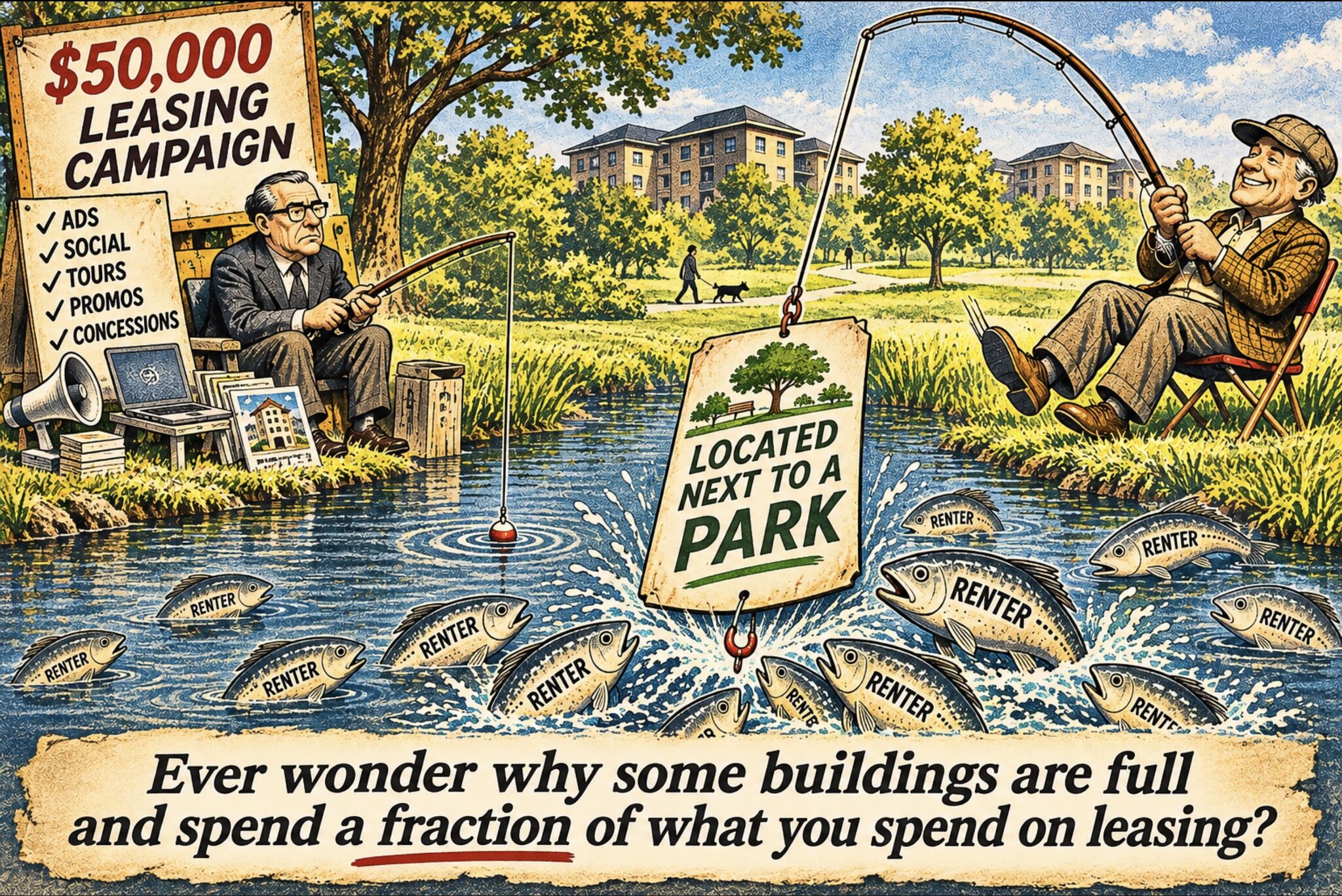
When I go back through my best deals, a lot of them share one boring trait. They needed fewer marketing dollars to fill.
Small ad budget. Few concessions. A leasing office that wasn't in a panic on the 25th of the month.
That's a clue. The work is figuring out why, and how long it lasts. Some reasons come with the location. Others the market lends you, and it wants them back.
The park. Say your building sits next to the best park in town, and the other buildings are blocks away. Renters walk their dogs past your sign every morning. One review of 33 studies put the premium on property next to a passive park at 8% to 10%.
Now look next door. The park doesn't move. Neither does the empty lot next to your building and developers can read a map too.
The oil rig. In early 2014, Apartment Guide ranked Williston, North Dakota, the most expensive place in America to rent an entry-level one-bedroom. $2,394 a month for 700 square feet. More than San Jose. More than New York. For a lot of owners, leasing meant managing a waiting list.
Then oil prices fell and the cranes kept swinging. By 2016, a local survey found the newer complexes about half full and two-bedrooms renting for about half what they did four years earlier.
The artists. A few painters move in. Then their friends. Then their friends' friends, who all need good light and neighbors who don't complain about the smell of turpentine.
Congratulations, you have a referral engine. A study of about 10,000 bank customers found referred customers stayed longer and were worth at least 16% more over time.
This one lasts as long as you tend it. Let the place go stale, or push rents faster than the community can take, and the people who made it cool leave for somewhere cooler.
The discount. Price $75 under the comps and the phone rings. Hand out gift cards in a lease-up and you close more of your traffic. Moving is miserable, and people will take a deal to make it a little less miserable. It works for as long as your comps can't or won't match you. Often they can.
So, four kinds:
Permanent. Comes with the deed.
Sticky. Lasts if you tend it.
Rented. The market lends it, then wants it back.
Bought. Lasts until the comps match your price.
Plenty of buyers skip all of this. They plug a standard marketing number per unit into the model and move on. If the edge is permanent, that number undervalues the building. If it's rented, changing it makes sense.
Three questions sort it out:
Does it come with the location?
Can a competitor build or buy the same thing?
What ends it, and when?
Cheap leasing tells you something is working. It doesn't tell you how long.
What other traits have you found on your best deals besides location, low price, cheap debt, or cheaper operation costs?