Writing · AI / Automation / Tech
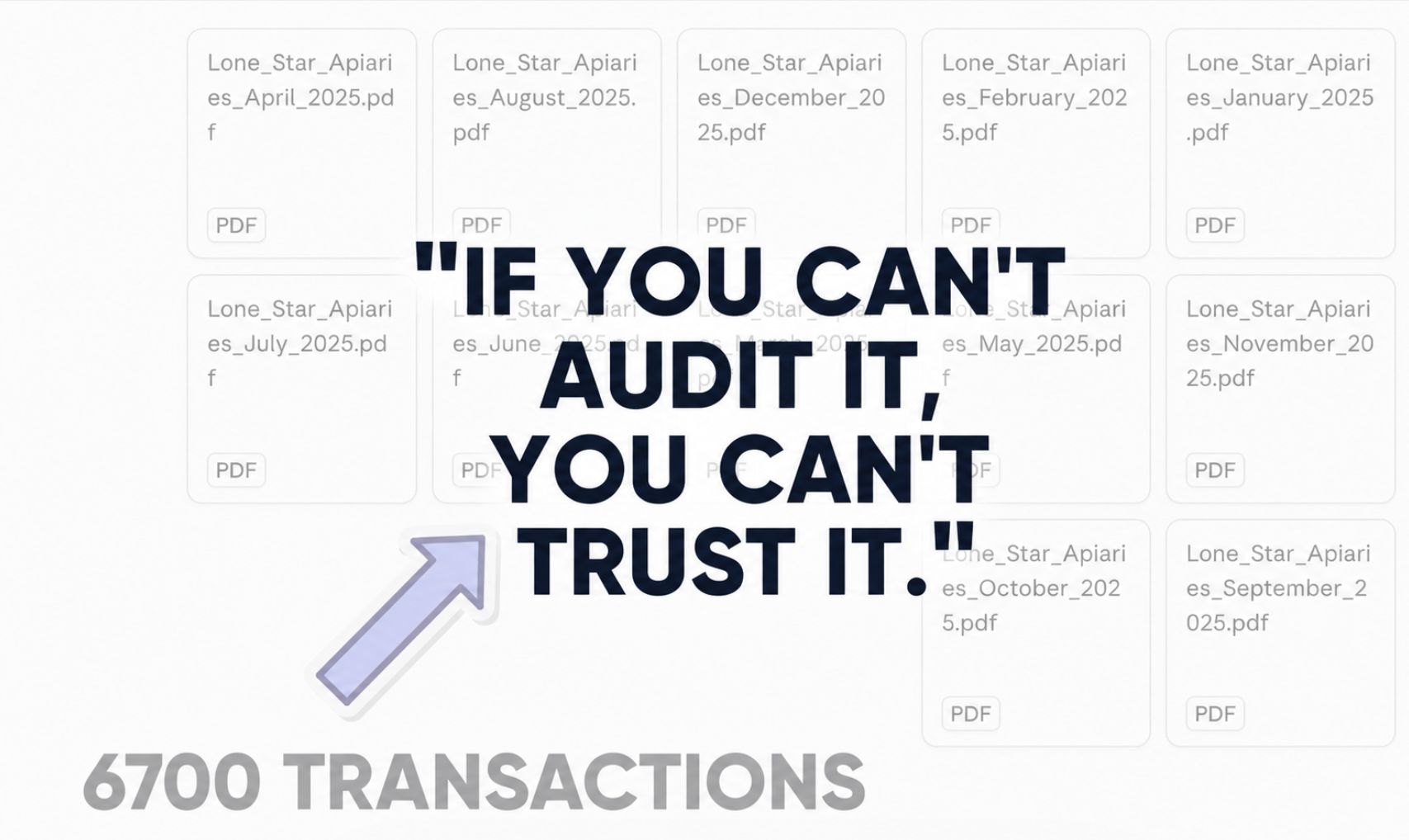
A CPA fed twelve months of bank statements into Claude. Not exports. Image scans. 6,700 transactions. Seven minutes later, the balance sheet footed.
My first thought was the right one. No way that's real.
It was. He ran a 40-person firm and sat there drinking his coffee while the thing classified 6,700 lines and flagged its own guesses.
Cool trick. But it hands you a finished balance sheet and won't tell you how it got there. Which transaction went where, and why. A black box that foots. Try defending that number to your bank. Or the IRS.
So he bolted on one piece. Beancount. A plain text file that holds real double-entry books. Open source since 2007. Free.
Now every number on that statement traces back to a line you can read. Plain text, so it drops into Git and every change is logged, what moved and when. It even checks itself: tell it an account should hit a number on a date, and it flags the mismatch. You stop taking the machine's word for it. You check its work. And it's a real file you can share or reopen later.
Almost twenty years it mostly sat there. Filling it and classifying it took a human or a subscription. That cost just went to almost nothing.
Here's where it stopped being a party trick for me.
Every deal we get under contract, I get the seller's bank statements and their T12. The question: is the income they're selling me the income that exists?
Pad it, and I pay for the padding in the price.
So me or my analyst pulls it apart by hand. Export the transactions. Retype the amounts. Back out the reserves, the draw requests, the non-cash junk. Then tie what they claim they made to what actually hit the bank. Hours of it. Every deal.
On the next deal, that pull and tie-out is the machine's job, not my analyst's. It leaves a file I can check.
Now the part the hype videos skip. A bank statement shows cash moved. It doesn't tell you whether the story is honest. It won't catch collections yanked forward to pad the trailing twelve. The reconciliation gets me to the real question faster. It doesn't answer it. That still takes a person who's been lied to before.
Someone will build the real AI ledger. I'd bet on it. And it won't look like QuickBooks, which is a database with a form on the front of it. The next one reads a roof invoice, a tenant text, a bank feed, even a voice memo, and books all of it, then lets you ask your books a question instead of clicking through them.
That's the destination. This isn't it.
This is a free text file and a model that already exists, doing the boring, expensive part today while somebody builds the real thing. A bridge. I'll take the bridge.
Credit to Jason at Jason On Firms, he put me onto this. His video and the repo are in the comments. If you underwrite deals or do this type of work, point your model at the repo and go.