Writing · AI / Automation / Tech
A magazine Charlie Munger had a stake in lost to a competitor that gave readers less. That was it’s advantage.
In 1994 Munger told a story about losing. Berkshire was the largest shareholder in Capital Cities/ABC, which owned trade publications. One was a travel magazine aimed at business travel. A competitor launched a magazine built only for corporate travel departments.
The narrow one won. It could say more to the people running those departments. It also quit paying to print and mail pages its readers skipped.
Munger's read: "occasionally, scaling down and intensifying gives you the big advantage."
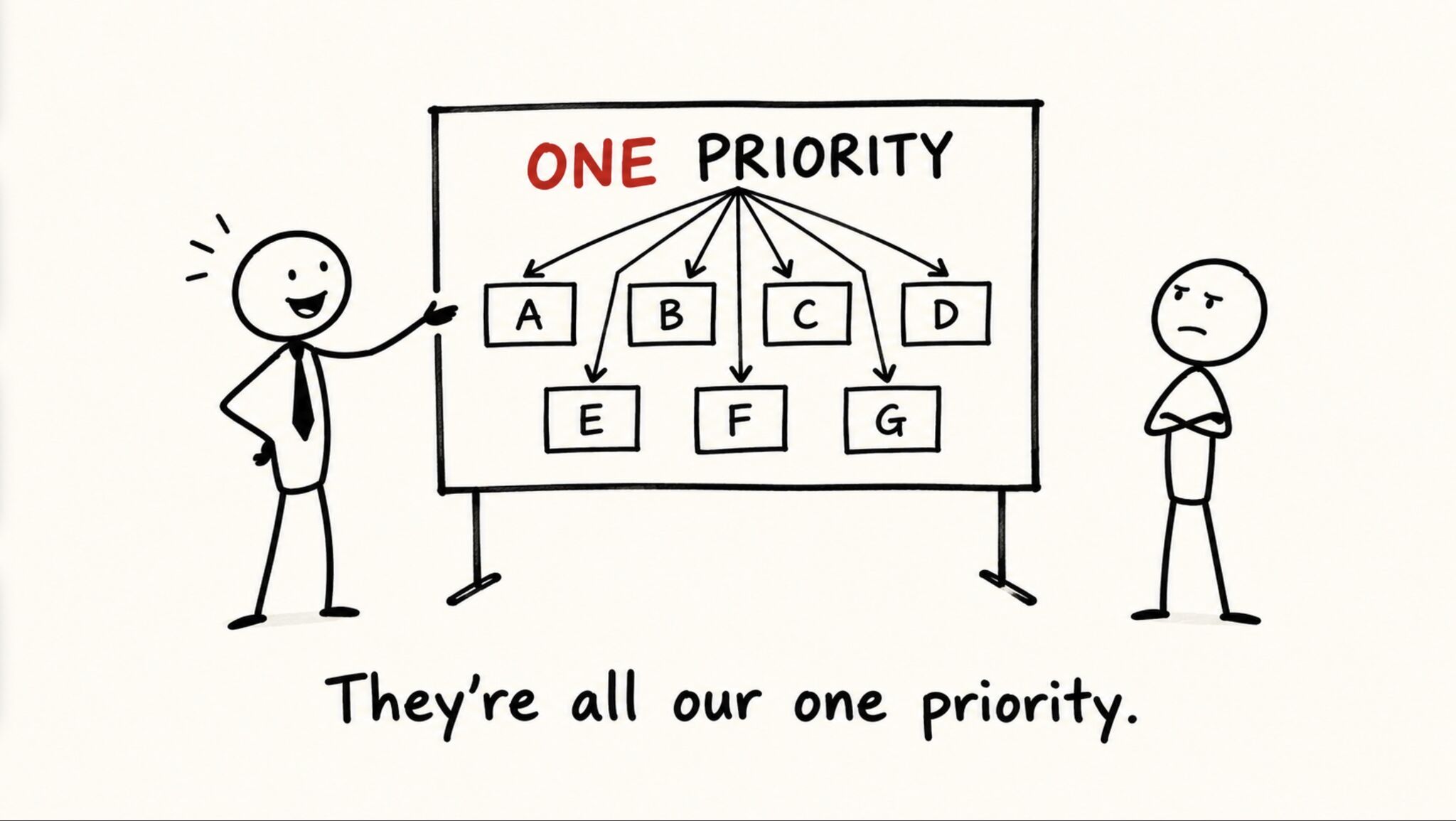
I think about that on every founder call. One product, working for one kind of customer, not yet great. And the roadmap already has the full suite on it. They want the whole stack for their niche before they own one piece of it.
Narrowing the customer and narrowing the product are different moves. The magazine made both. It picked a narrower reader, then cut the pages that reader skipped. Founders take the first half and stop.
Focus is the oldest advice in business. So why is it so hard?
A big market is easier to pitch than a small one. Customers buy the size of the fix. The ask for the next thing often comes from a real customer who really wants it, so yes feels like service. And rarely does a single yes ever looks like the mistake. That's why the pile gets built.
Saying no saves money. Four resources, all finite: attention, time, staff, cash. Every yes spends all four, and attention is the one you can't go raise more of.
Somewhere out there is a guy who works on one thing. Every day. Same customers, same complaints, getting sharper while you run a kickoff for product three. You're not average at four things against his one. You're average at four against the best in the world at the thing you both sell.
Bezos had the everything store in his head from day one. He named the company after the largest river on earth. He still opened selling books, because one category was the way in.
So before you build the next thing, run a gate. Are you the best at the one thing you already sell?
Then I got stuck on my own question. Best by what? I started listing the ways you'd know and they all fell apart in my hands. Sales, reviews, awards, retention, market share. Every one of them bundles the product in with brand, distribution, price, and how hard you are to leave. And the answer has to be different for a software company than for somebody selling a commodity by the ton.
We throw that word around like we've all agreed on it. We haven't.
So I'm asking. How do you define best in your industry? Which variables would you actually count, and why those? I'm curious what it looks like from where you sit.