Writing · Leasing & Conversion
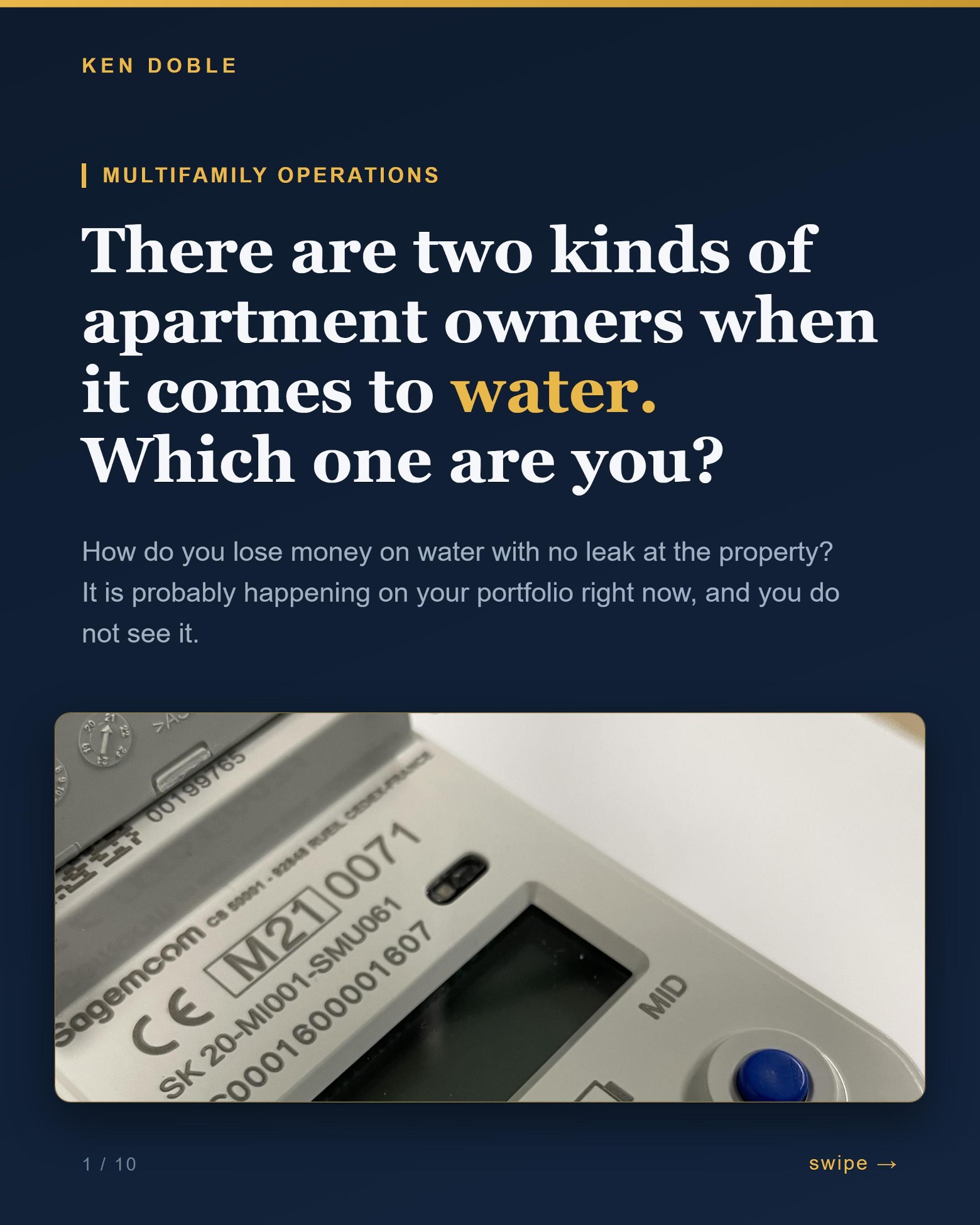
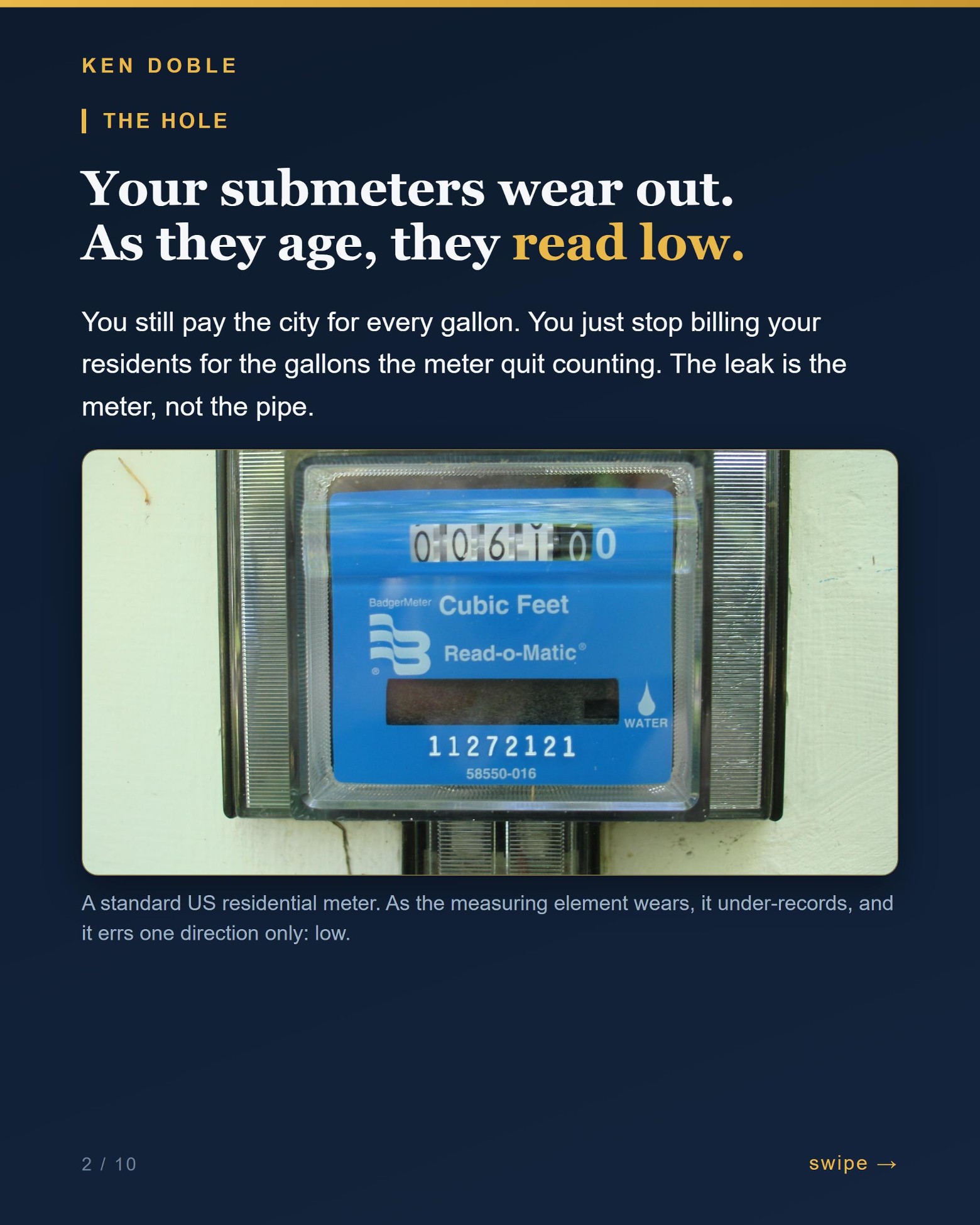
A worn water meter has never once overcharged a resident. If one ever reads high, the resident calls, and your team credits it right back, so it never sticks. It only undercharges them, and you pay the city for the difference. Strange how it only breaks one way.
So where does the money go?
The submeters wear out. The gears grind down and the measuring chamber scores. A mechanical meter cannot wear itself faster, it only slows, so the read drifts one direction only: low. The city still bills you for every gallon through the master, and you quietly stop billing residents for the gallons the worn meter no longer counts.
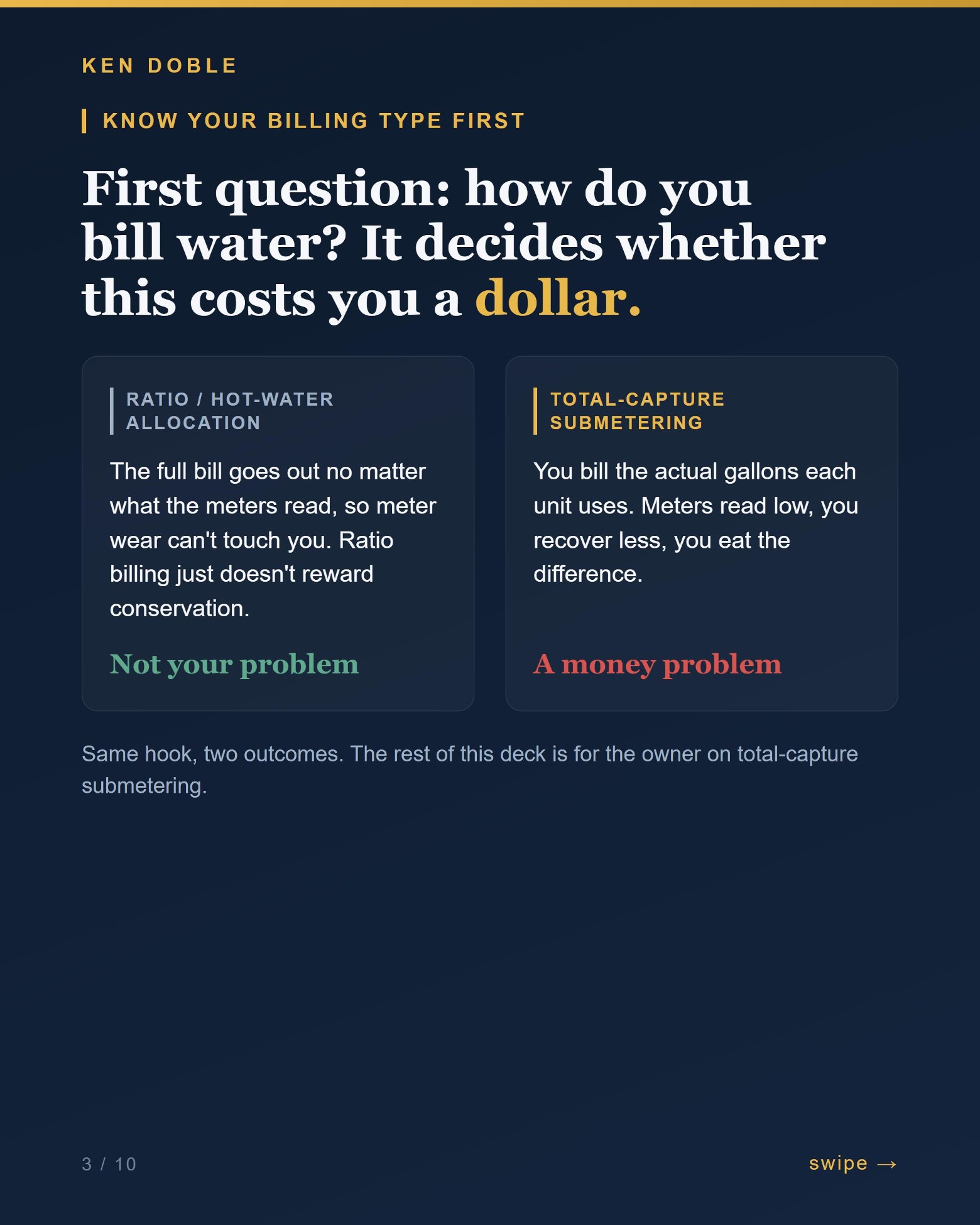
One catch, and it is the whole game: this is a total-capture problem. If you bill each unit for its actual gallons, a slow meter costs you. If you push the full city bill back out by formula, flat-rate RUBS or ratio billing, the whole amount goes out no matter what the meters read, so wear cannot touch your NOI.
Nothing spikes, so nothing trips an alarm. The gross bill bounces on its own, rate hikes one year, a hot summer the next, and the slow loss of recovery hides inside that churn. That is why you watch gallons, not dollars. Track the recovery ratio, gallons you billed residents over gallons on the city master, normalized for occupancy. A real pipe break is a one-year jump that recovers. Wear is a staircase down that never climbs back.
Run the number. 200 units, $1,100 a unit in water and sewer, a $220,000 bill. Let recovery slip from 90% to 82% and you hand back $17,600 a year. At a 6 cap, that is about $293,000 off your value the day you sell.
I built the 10-slide field guide below: the four failure types to read off the meter, and when to clean it versus replace it.
Overbill a resident, and the phone rings before lunch. Underbill them, and it runs for decades without many noticing the slow bleed on their NOI. Makes sense to check this on your site. Don't you think?