Writing · AI / Automation / Tech
How to guarantee nobody pays for AI
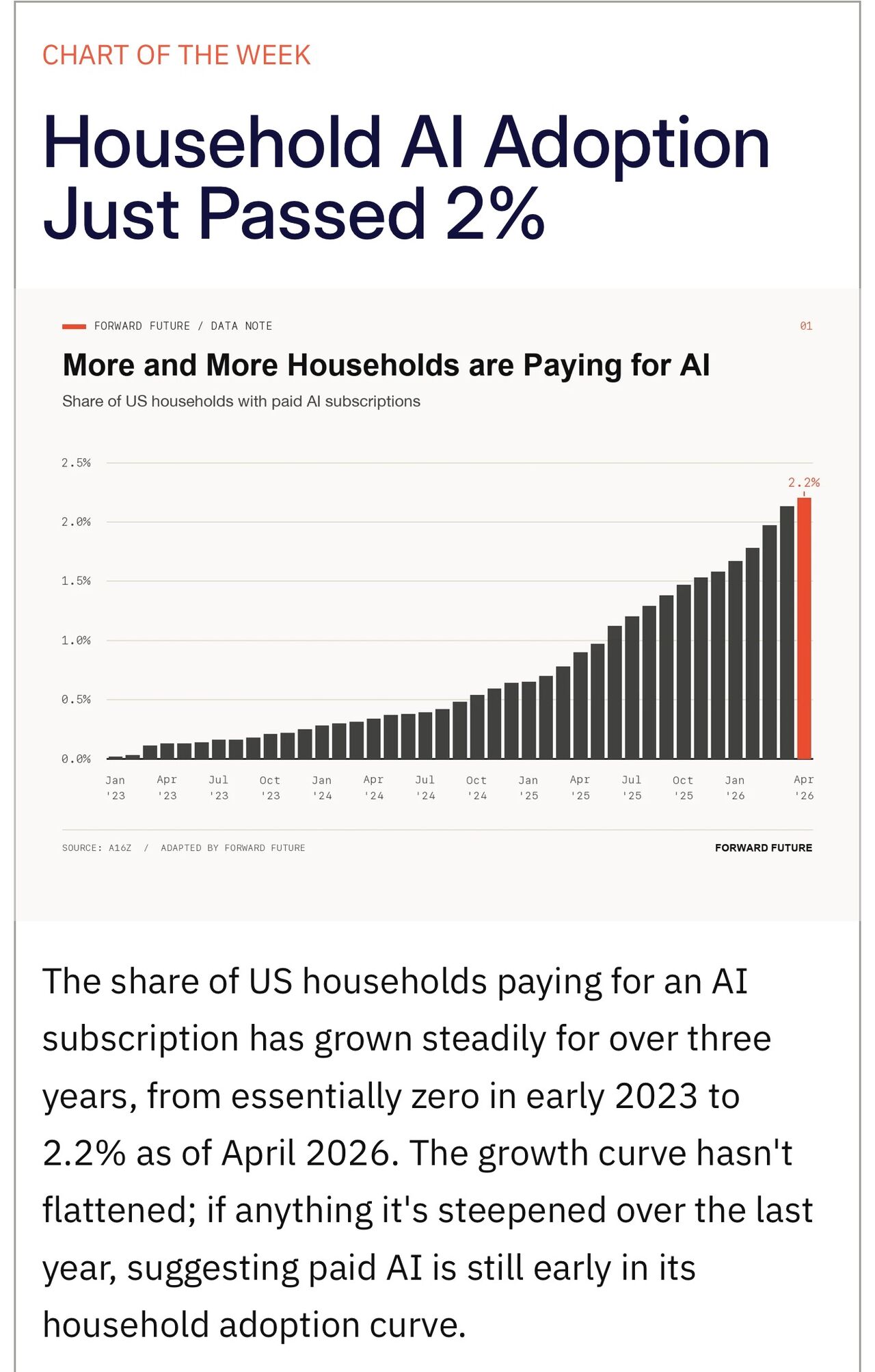
Three years of headlines about AI changing everything. As of April, 2.2% of US households pay for it.
Stare at the number and the reflex is to ask why it’s so low. Flip it. How would you guarantee it stayed low? Then count how much of that is already happening.
Four obvious ways.
Ship a free version that’s genuinely good. Good enough that $20 a month feels like buying bottled water next to a working tap.
Half of American adults don’t use a chatbot at all, and six in ten of those say they’re simply not interested. The free tier already clears the bar for the ones who are.
Reset the anchor every quarter. Cut prices, hand last year’s premium features down to the free tier, and teach the customer that waiting beats paying. Deep research and voice both made that trip. Users learn that lesson fast.
Destroy what the customer built. I spent months on n8n automations, wiring workflows together, feeling clever about it. The model does most of that now without the plumbing. I didn’t lose the knowledge. I lost the usefulness of it. Ten years in Excel used to make you harder to replace. Ten months in an AI stack keeps you only current, and it’s hard to get attached to a workflow you’ll rebuild in June.
Then charge monthly with nothing holding him there. No file format to trap him. No library he’d miss. Cancel and you still have the free plan.
Confusing the customer has an impact too. Job-loss headlines, AGI promised by Tuesday, and product names nobody can track. GPT 5.5, Haiku, Sonnet,Fable, Gemini 3.5, Grok 3, etc. Who is naming these things? Bring in some marketing people please!
Households is the wrong denominator, by the way. Employers and API bills are where the real money sits. Which is what makes this number worth watching: it’s what people spend when nobody makes them.
Ask them to pick one subscription and 69% keep streaming while 14% keep AI. That 14% is bending up while the industry hands them reasons to quit.
Are you surprised by this chart? I would have thought it was higher.