Writing · Leasing & Conversion
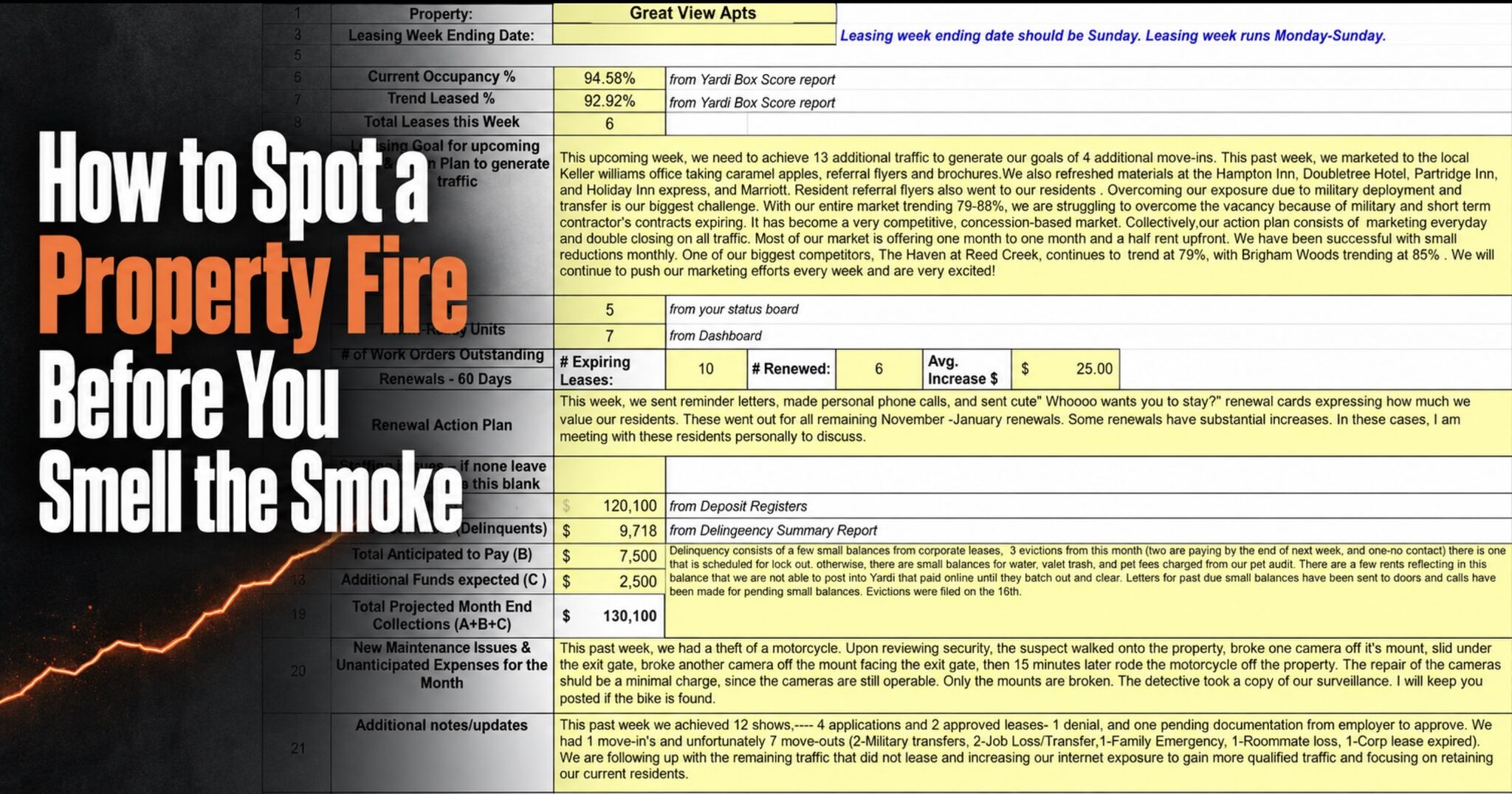
How to Spot a Property Fire Before You Smell the Smoke
We ran 23,000 units across 11 states. You cannot watch all of them at the same time. So you stop trying, and you watch the exceptions instead.
A handful of deals generate most of the pain. Twenty percent of the properties, eighty percent of the problems, and it tends to be the same twenty percent for months.
We ran a weekly hotlist call. Occupancy falls past a set line, leasing slows, collections slip, and the property lands on the list. One bad week did not put you there. A trend did.
The call had a shape: discuss the problem, decide the specific fix, and the rest of the list sits in and listens to how it gets done. Next week that manager reports what they put in place, what moved, what did not, and what they need changed.
Then we sent help. Site visits. An auditor on site for training. Whatever resource the fix actually needed. The marketing team to pull apart their ads, their website, and the two competitors quietly taking their leases while the site swore the traffic just was not there.
Every week I had one list: the problem, the plan, the next step and most importantly the follow up.
Managers hated being on that list, and that is the trap. Run it like a punishment and the numbers get shaded, and you find out in month three instead of week two.
The other list mattered just as much. We ranked the top properties on collections, expense control, occupancy, and audit scores, and the winners got real money, trips, events, etc. A manager should be able to see where they stand in both directions.
Now, blame.
Our industry loves a name. Something breaks at the site and the hunt starts for who is responsible.
Deming put 94% of problems in the system, and the system belongs to management. If your property is failing, that manager may own a piece of it. You own the rest. Maybe they were never shown how to fix it, or the bonus plan quietly pays them for something else, or the question that would have surfaced the real problem never got asked because the person with the authority to ask it had not stood on that property in six months.
Fix the problem. Skip the blame.
Sometimes you do have the wrong person. Before I get there I want to know whether they had a reason to fix it, whether they had the resources and the training, and whether anyone ever sat down beside them and worked the problem with them instead of sending another email about it. Firing is the last move I make, and a scared team hides bad news until it is expensive.
I tell my property managers and my maintenance supervisors the same thing. My job is to make your job easier.
If I am making it harder, the problem on the list might be me.