Writing · Sales / Negotiation
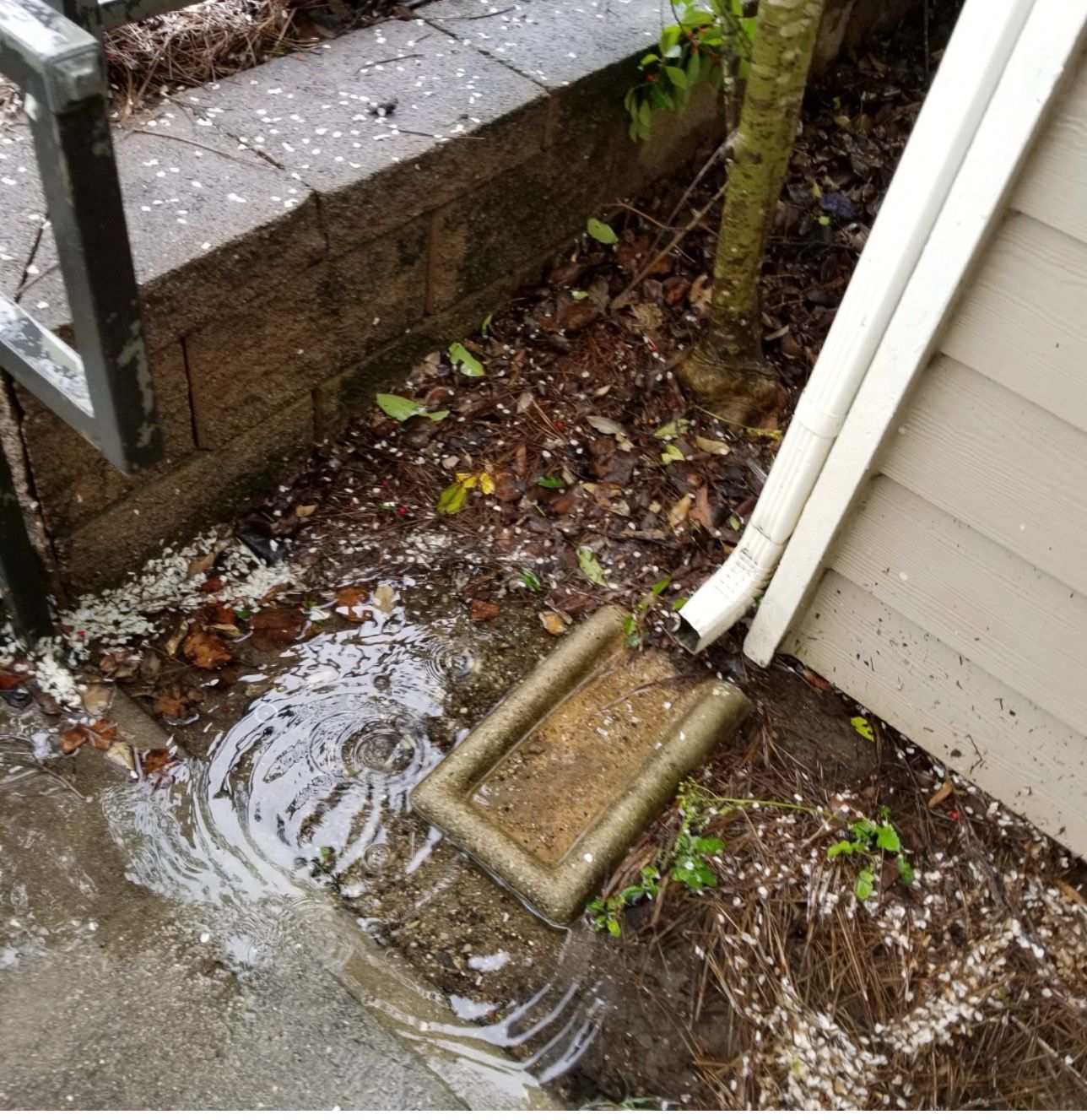
Look at this photo. Water pooling at the base of the building, right where the downspout dumps it.
That concrete splash block is doing the opposite of its job. Instead of throwing water away from the foundation, it’s holding a puddle and feeding it back toward the wall. And the grade right here isn’t helping. It’s moving water into the building, not away from it. The splash block is the symptom. The drainage is the disease.
This is how you kill a building slowly.
Water against a foundation doesn’t announce itself. It seeps. It wicks up into the wall and the framing, and it sits there through every rain. Give it a season or two and efflorescence blooms on the block, the ground-floor units start to smell, then mold sets up behind the drywall. Give it a few years and the foundation itself starts to go. By the time a tenant complains, the cheap problem already turned expensive.
A lot of times I see owners jump straight to ripping it out and installing new drainage. Start basic instead.
Turn the splash block the right way so it throws water out, not back toward the wall. Slope the soil and the mulch bed down and away. Then go find the drainage boxes, because on an older property nobody has cleaned them in years. They’re packed with leaves and dirt and they haven’t drained since the last management company. Check that every downspout is still connected and the original system actually works.
Half the time, that’s the whole fix. Nothing installed, nothing rebuilt. Just the maintenance somebody skipped for a decade.
If the bones are truly gone, then you go dramatic. Tie the downspout into buried PVC, pitch it right, and run it out to the lot drain.
Turning a block and clearing a drain box costs an afternoon of labor. New PVC to the parking lot is low four figures. Foundation repair runs five to twenty grand, and mold stacks on top, and that’s before the units you can’t rent while it dries out.
Water is the cheapest of problems you’ll ever catch early, and one of the most expensive if you ever neglect it.