Writing · Leasing & Conversion
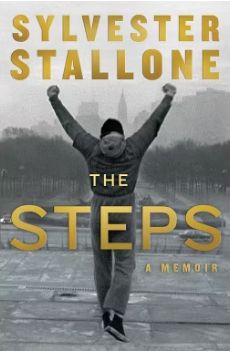
Rocky took three and a half days to write. Learning how took six years.
In 1975, Sylvester Stallone had $106 in the bank. Producers offered him more than $300,000 for his script, on the condition that a bigger star played the lead.
He said no.
I just finished The Steps, his new memoir. It runs from 1969, when he hit New York with almost no money, to the night in 1977 when Rocky won Best Picture.
I did not expect a Stallone book to be this well written. It is. Read it for the inspiration alone: a man who kept his dream alive while casting agents repeatedly threw him out of their offices.
What I took away from reading this book was how he taught himself. He worked as an usher at the Baronet, a theater across from Bloomingdale's. He called that job his film class 101 in screenwriting. He took notes on the movies during his shifts, then went home and took the dialogue apart. Why did this scene land? Why did that one die? He studied the flops as hard as the hits. A bad movie shows you exactly where a scene goes to die.
The first draft of Rocky took three and a half days. Getting there took six years of ushering and scripts that didn't sell. James Cameron, who went on to make Avatar, learned the same way. In the 1970s, he drove a truck and worked as a high school janitor, and he taught himself film by going to the USC Film library and reading students' research papers. After Star Wars came out in 1977, he quit the truck.
Next, the fight choreography. He didn't like how most boxing films were filmed at the time. There was no realism. He thought he could do it better. Stallone went back to tapes of great fighters and watched them over and over until he saw the patterns. He wrote the best punch sequences on index cards, one combination to a card. The final bout with Carl Weathers was built from those cards, written out punch by punch. For four weeks before filming, he and Weathers ran it while the director shot them on a Super 8 camera, and then they watched the tape to find the weak spots. Same move as the usher job, pointed at real fights instead of movies.
The movie cost about $1 million. It grossed around $225 million and won three Oscars.
When we want to get better at something, we tend to reach for a course or a certificate. Stallone's classroom was the finished work itself, good and bad. Your field has its own version of that dark theater: shareholder letters, a competitor's ads, the deal that blew up last year, a recording of your best salesperson on a call. Some of it is free. Some of it costs real money, and the deal that blew up cost plenty.
Either way, it only pays if you study it the way he did, notebook out, taking it apart line by line. If you can't break down the concepts on a whiteboard in front of your peers, then you really don't understand it.