Writing · Pricing / Revenue Management
𝗦𝗮𝗯𝗿𝗶 𝗦𝘂𝗯𝘆 𝘀𝗮𝘆𝘀 𝗮 𝗯𝘂𝘁𝘁𝗼𝗻 𝘁𝗵𝗮𝘁 𝗿𝗲𝗮𝗱𝘀 "𝗡𝗼, 𝗜 𝗱𝗼𝗻'𝘁 𝗹𝗶𝗸𝗲 𝗳𝗿𝗲𝗲 𝗺𝗼𝗻𝗲𝘆" 𝗰𝗮𝗻 𝗱𝗼𝘂𝗯𝗹𝗲 𝘆𝗼𝘂𝗿 𝘁𝗮𝗸𝗲 𝗿𝗮𝘁𝗲.
I went looking for proof.
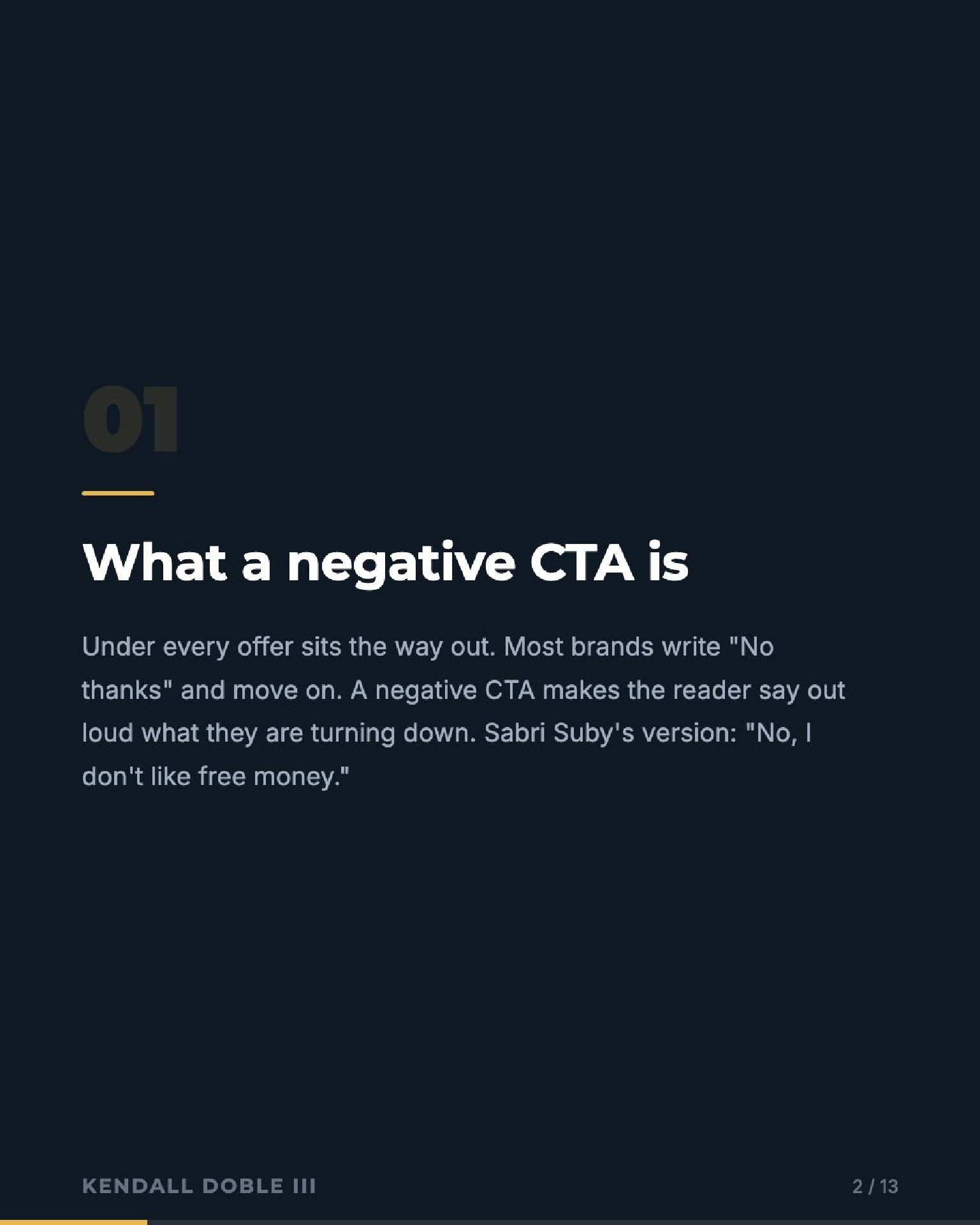
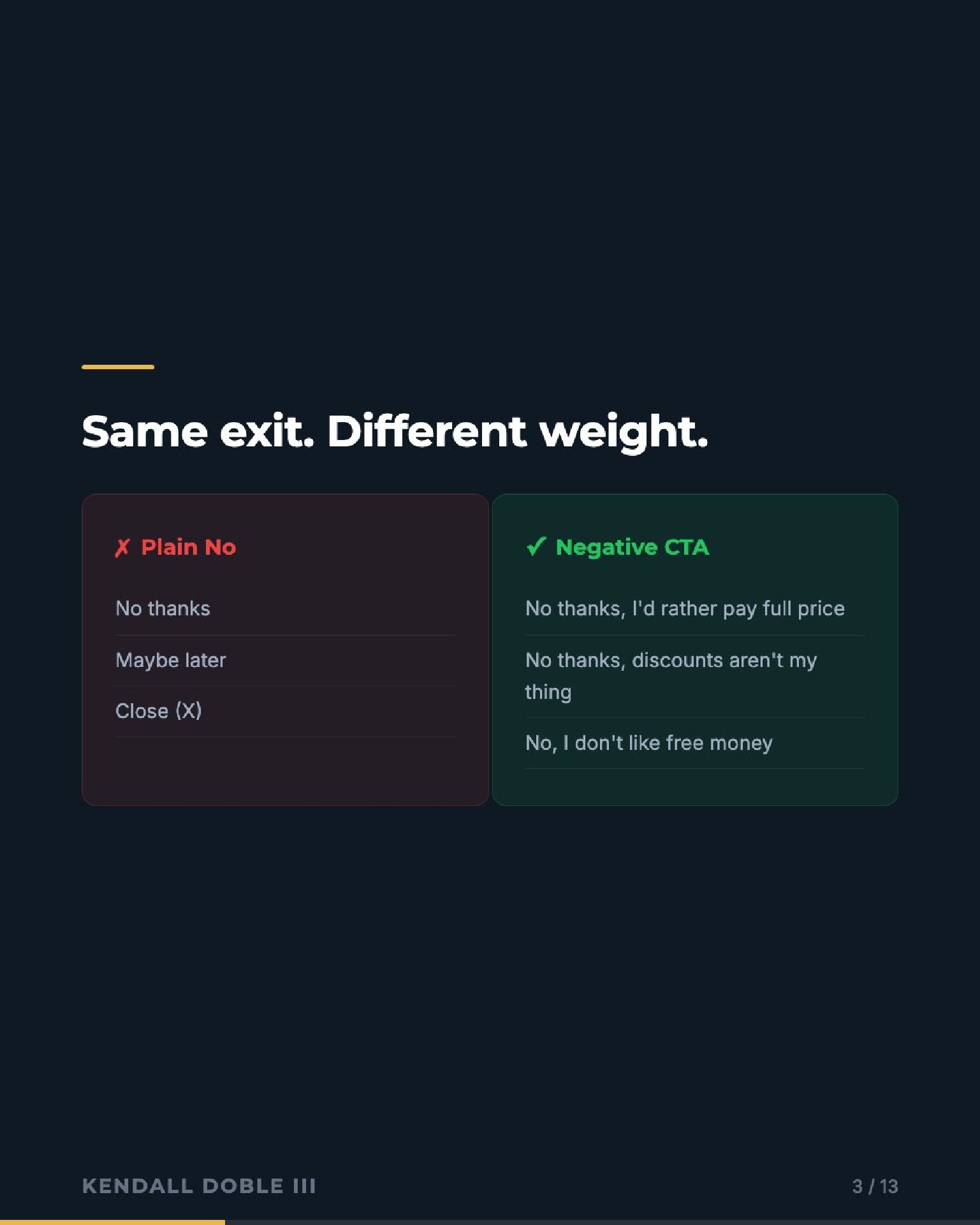
He calls it a negative CTA. Under the big "Yes, send it" button, you put the way out, and you write the way out so the reader has to say what they're turning down.
Sabri's number is his. He sells marketing, and I couldn't find it anywhere else.
The closest thing I found to a clean test is a 2021 online experiment by Luguri and Strahilevitz. About 1,900 people in two groups got the same data protection offer. One group saw a plain decline. The other had to click "I don't care about protecting my data or credit history." Plain decline, 14.8% said yes. The pointed one, 19.6%.
About a third more yeses. Not double.
And look at the wording they tested. That one isn't funny. It still worked.
The academics call all of these "confirmshaming." An FTC staff report from 2022 calls it a dark pattern, and puts it in the same report as junk fees and subscriptions you can't cancel.
That lumps two different things together.
"No thanks, I'd rather pay full price" is a joke about the price. You smile, and you get one more reminder of what you're walking away from. Then you click whichever one you want.
"NO, I will take risk" on an airline's trip insurance box reads like fear to me, and I'd guess the people booking those flights read it the same way.
The study tested the mean kind. I haven't found anyone who tested the funny kind against it. My money's on funny, and I can't prove it yet.
If you put one of these on a privacy or consent screen, talk to your lawyer first.
If something actually lifts conversion in a funnel, I figure it’s worth passing along.