Writing · Capital / Finance / Investing
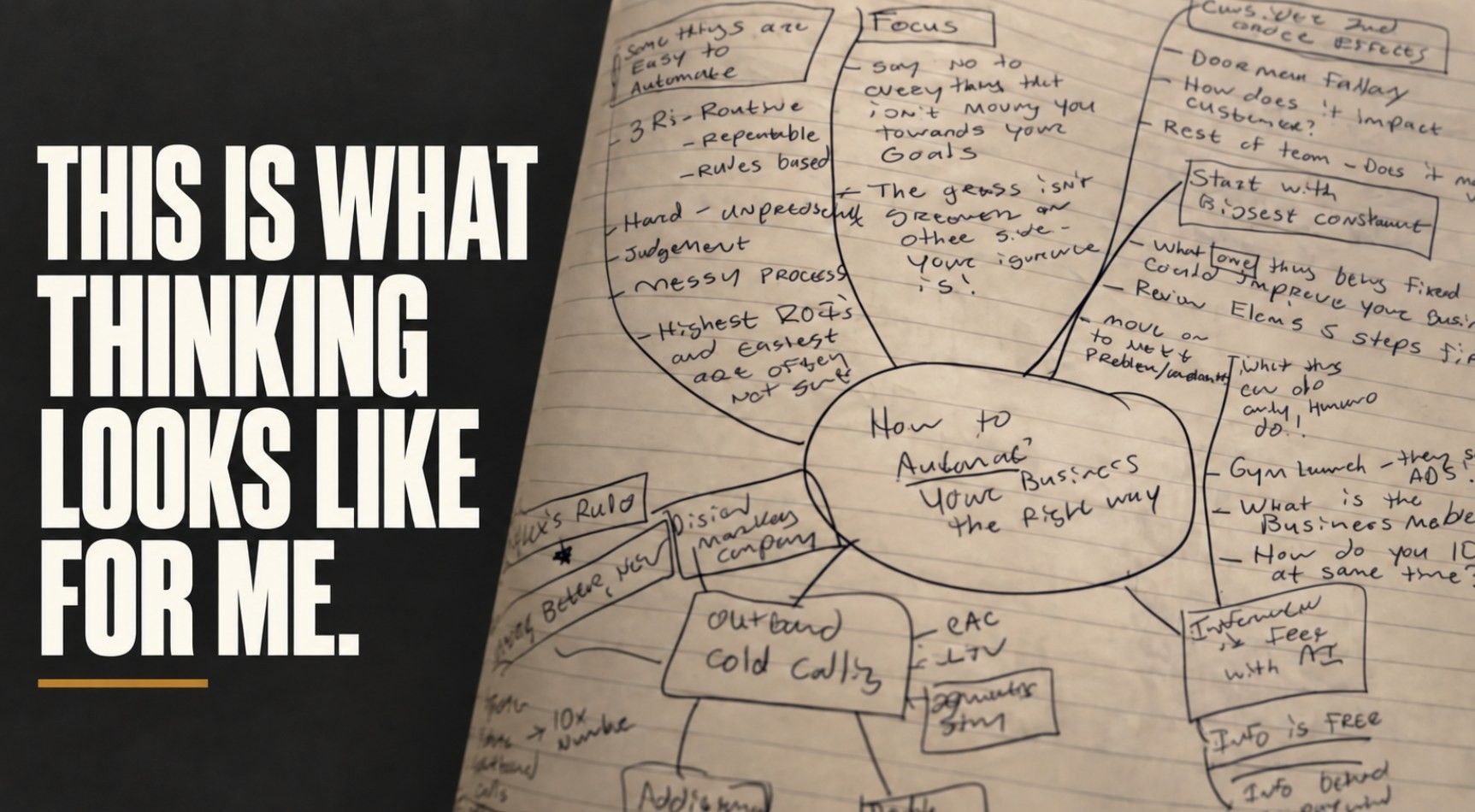
What on Earth does sitting and thinking actually look like to Warren Buffett and Charlie Munger?
"We both insist on a lot of time being available almost every day to just sit and think. That is very uncommon in American business. We read and think." - Charlie Munger, on himself and Buffett
Before you read any further, 🛑 stop and write down how you actually think. Your own answer will be worth more to you than mine or theirs.
Buffett went through the Moody's manuals page by page, thousands of companies he held no position in, hunting for one he understood. Annual reports, trade journals, and the filings of competitors in businesses he didn't even own. Munger read biographies and hard science because he wanted models from outside the money business.
What came out of all that reading was a map of how a handful of businesses actually work. Where the dollar comes in. Who touches it on the way. What it costs to go get the next one, and what that cost does when the market turns. The decisions came fast because the preparation was slow.
A historian once described Feynman's notebooks as a record of his day-to-day work. Feynman stopped him. I actually did the work on the paper, he said. It's not a record. It's working. You have to work on paper, and this is the paper.
Bezos banned PowerPoint at Amazon and made people write six-page memos instead, then sit in silence for the first half hour of the meeting reading them. A memo has to show the logic that bullets let you skip.
My partner Christian thinks out loud, often standing at a whiteboard. He maps a capital stack or a legal structure in boxes and arrows until the mechanics are visible, then goes and writes it up.
Mine is a plain paper journal and loud rock music in the background. Detailed mind maps, and usually an Excel model of the drivers of the business, because if it is a business problem and I can't model the drivers, I don't understand it well enough yet. Then I go looking for the questions, which usually sit one layer under or above the problem, and then I go read whatever I just found out I don't understand, and then I build an experiment to test the idea.
You will get far more failures than breakthroughs. It's a volume game. Alex Hormozi, another one of my favorite thinkers, says volume negates luck. He's right, as long as you keep testing and applying the feedback. Poor thinking times 100 still gives you poor results.
Buffett kept an almost empty calendar. With 40 people and a phone that rings, the hour doesn't show up on its own. It gets blocked like a meeting you wouldn't cancel.
So how do you think? What's your routine for getting into it?