Writing · Leasing & Conversion
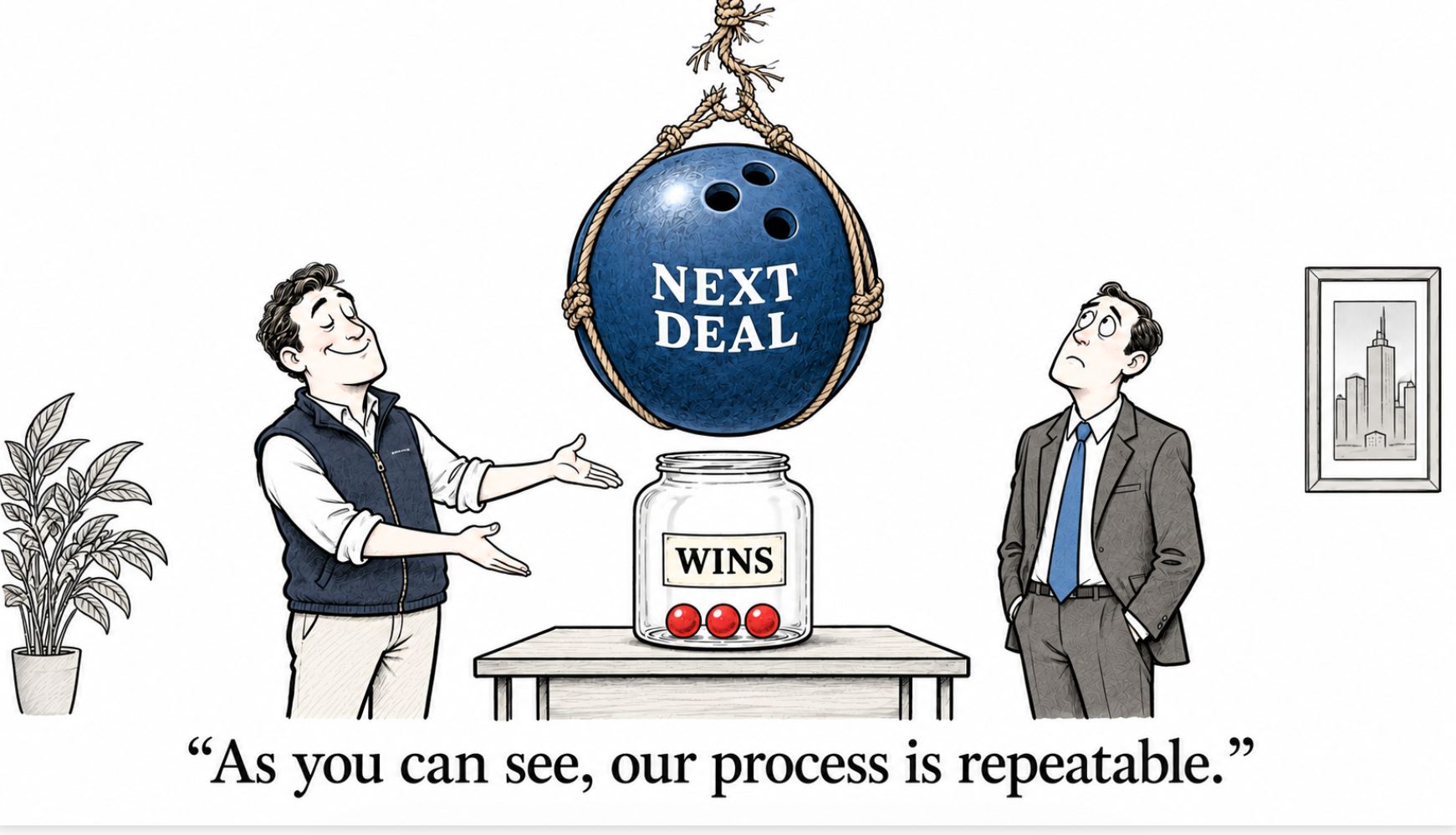
Would You Invest With a Sponsor Who Can't Name His Worst Deal?
A six-foot man drowned crossing a river that averaged four feet deep. The average was accurate. He's still dead.
Careers work the same way. It matters when you hit the deep part.
Two guys start syndicating apartment investments the same year. Each does four deals. Three win, one loses. Only the order changes.
Guy A wins his first three. Brokers call him first, his lender cuts the rate, and he launches a podcast and a course. So he raises $50 million for deal four, because clearly he's a genius.
That's the one that goes bad.
Guy B loses his first deal, a small one, and hands the keys back. His LPs pass on deal two. It takes him three years, a personal guarantee, and a lot of humble lunches to get back in.
Then his next three deals win.
Same record. B's loss cost $2 million and taught him the business. A's cost $40 million and came with a lawsuit.
Economists call this path dependence. Early wins bring capital, capital brings better deals, and the lead tends to stick. So don't rush. Scaling fast means betting bigger before you know whether your early wins were skill or luck.
If you're writing the check, ask the sponsor the following. When did a deal go wrong? What did you do about it? What do you do differently now?
If he can't name a bad deal, he's either that good, that lucky, or not telling you. Your homework is figuring out which. Get the full deal list, including the ones handed back. Call the LP who isn't on the reference sheet. A perfect record from 2012 to 2021 never had to survive rising cap rates.
Owners who've lived through a bad deal tend to be more cautious. They paid for that mistake once and try hard not to pay for it twice.
Then there's the guy who has never lost a nickel. He tells you so from his yacht. Maybe he's that good.
Or maybe he's Guy A, and your check is about to fund deal four.